Concrete Parking Lot Building in New Bedford MA - a lot that drains and stays flat
Cracked, puddled or worn-out parking area at your building? We build concrete lots on a packed base, with drainage and permits planned first.
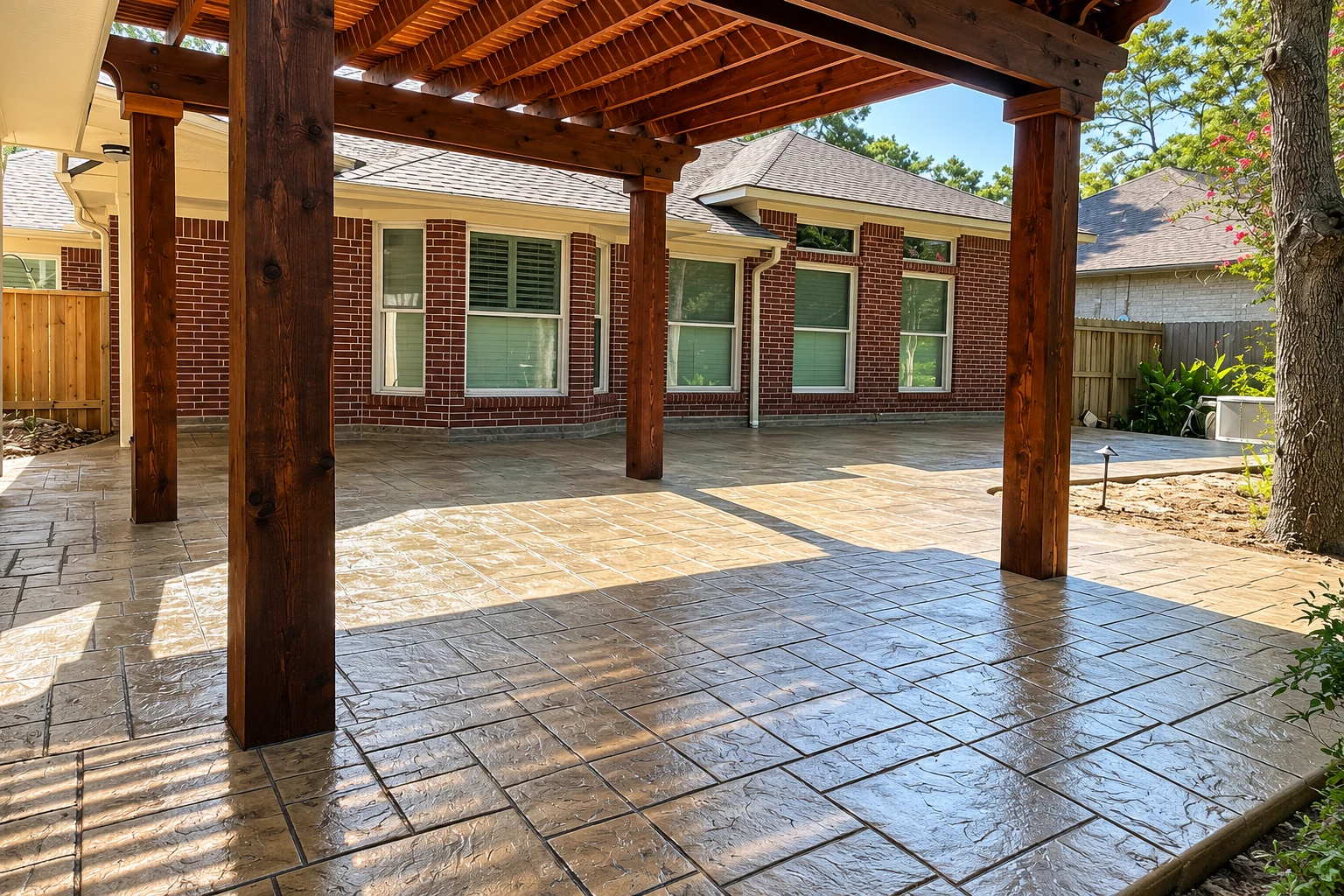
Base dug and packed
We dig out and pack the base before any concrete goes down.
Drainage planned first
We set the grade so water runs off, not toward buildings.
Permits and paperwork
We help start the engineer's plan and city filings early.
Pour, joints, cleanup
Our crew pours, finishes, cuts the joints and cleans up.
What goes into building a concrete parking lot in New Bedford?
Concrete parking lot building in New Bedford means planning where the water goes, digging out and packing a solid base, and pouring a jointed slab that can carry cars for years with little upkeep. On a lot, the planning and the city permits usually take longer than the pour itself.
The price moves with the size of the lot, how much dirt has to come out to reach firm ground, where the water needs to go and whether the entrance meets the street. The schedule turns on the engineer's plan, the city's review and the weather, and your written estimate spells out the prep, the mix and what's included.
Most of what decides how a lot holds up is buried on day one, so if the budget gets tight, I'll trim the finish before I trim the base. A smooth top poured on a raked-flat subgrade, the ground the slab sits on, just settles with the dirt. We also help you get the engineer's plan started early, since the city's stormwater permit leans on it.
- A base dug out and packed
- Water sent away from your buildings
- Joints cut where cracks should go
- Plain answers before and during the job
When does a property need a new concrete parking lot?
If cars, tenants or customers are dealing with any of these, it's worth having the lot looked at before another winter works on it.
Water pooling in spots
Puddles that sit for days after rain mean the surface lost its fall, and standing water freezes into ice where people walk.
Sinking or uneven sections
When sections tip or drop where cars turn, the base under them has usually washed out or settled with the dirt.
Cracks spreading across it
A few hairline cracks are normal, but cracks that widen, branch out or lift at the edges mean the slab is breaking up.
Chipping and a dusty top
Flaking or pitted concrete usually points to a weak top from a rushed or hot-day pour, and every winter peels more of it back.
A gravel or dirt lot
A gravel lot that ruts, throws stones and turns to mud every spring keeps costing you in regrading and tracked-in mess.
Adding spaces or an entrance
If you're growing the lot or moving where cars come in off the street, the new section and the city sign-offs need planning together.
Get a free parking lot estimate
Send the address, rough lot size and any entrance plans. We respond within 1 business day to set up your free on-site estimate, with no pressure to book.
What I check before building your parking lot
Before I recommend anything, I walk the whole site to see where the water goes, what's on the ground now, and how cars will come and go.
Where the water runs
I look at which way the ground falls and where roof and street water lands, so the lot drains away from buildings.
What's there now
Old pavement, gravel or fill each come out differently, and they set how much we dig out and haul away before the base goes in.
How cars come and go
I look at turning room and where the entrance meets the street, because a street entrance brings the city in early.
Edges, posts and footings
Where the lot meets a building, we check for settling that calls for foundation raising, or posts and light poles that need concrete footings.
How a parking lot job runs with us
A lot job is mostly planning, so we line up the paperwork, the engineer and the pour date around how your tenants or customers use the property.
Call or send the form
You call or send the form with the address and what you need, and we set up a time for me to come see it.
I walk the site
I look over the lot and ask what you need it to carry, from delivery trucks to a handful of tenant cars.
Your written estimate
I write up an estimate that spells out the prep, the mix and what's included, so you can see what you're paying for.
Permits, then the pour
If your project goes to site plan review, it starts with a building permit at Inspectional Services in City Hall. We pour once it clears and the weather allows.
Walk-through together
Before we pack up, we walk the finished lot with you and answer whatever you want to know about caring for it.
Why New Bedford owners call Form & Finish for their parking lot
You get someone who explains what you're paying for, from the base to the mix, and who would rather stay on the phone for your third question than leave you guessing.
Licensed and insured
We're licensed and insured, and I'm happy to show you the paperwork before anything gets dug up.
Six years, since 2020
I started this business in 2020 after learning concrete alongside experienced crews around New Bedford, and small business lots are part of our work.
Our crew, with me running it
I write the estimate myself, then our own crew does the work while I'm on site running it from the dig to the walk-through.
Satisfaction guaranteed
That's our promise. Call (508) 501-9902 or send the form, and I'll come out and look at your lot.
Concrete parking lot building in New Bedford and nearby
The city's Department of Public Infrastructure, the DPI, requires a stormwater permit for new development and redevelopment that isn't exempt, and even resurfacing a commercial lot is on its list. A new or changed curb cut needs Traffic Commission approval, starting at the DPI, and any work in the city's right of way must be done by a City of New Bedford Bonded Contractor. We start those talks with the city right away.
Around here we mostly see older lots behind shops, rentals and small offices, often patched over gravel and pitched toward a building. The same salty, freeze-and-thaw winters hit lots in Fairhaven and Fall River, so we bring the same careful prep wherever your lot is.
Planning a new lot or replacing a worn one?
(508) 501-9902Parking lot questions we hear
How much does a concrete parking lot cost in New Bedford?
Commercial concrete flatwork like parking lots usually runs about $6 to $14 per square foot across the US, and that's a national range, not our quote. Where your lot lands depends on its size, how much digging and base work it needs, the drainage and any engineering or entrance work. Your estimate gives you your own figure.
Do I need a stormwater permit for a parking lot in New Bedford?
Usually yes, unless your project is exempt, and the application needs a plan stamped by a professional engineer registered in Massachusetts along with stormwater calculations. Since the permit waits on that plan, we help you get the engineer started early and handle the paperwork we're able to file.
Can concrete be poured in winter in New Bedford?
It can, but fresh concrete has to be kept from freezing until it gains enough strength, which one trade group puts at about two days after the pour, so a cold-weather pour needs that protection planned from the start. Separately, the city doesn't allow sidewalk, wheelchair ramp or driveway work from December 15 to April 1 without the DPI Commissioner's written approval, so plan any of that work at your entrance outside those dates.
How do I care for a new concrete parking lot in its first winter?
Skip deicing chemicals that first winter, as one concrete trade group advises, and use them in moderate amounts after that. Plan on plowing and sand for traction the first season, and we'll talk it through at the walk-through.
What is the best concrete mix for a parking lot in Massachusetts winters?
Ask for air-entrained concrete, which holds tiny, evenly spread air bubbles that relieve the pressure when water in the slab freezes. Your estimate names the mix, so you can check it's there. If cutting salt matters to you, one university study found black ice didn't form on pervious concrete, so salt wasn't needed during thaw and refreeze, and that's worth talking over.
What causes a concrete parking lot to crack?
Most lot cracking comes from a base that was raked flat instead of dug out and packed, water running under or against the slab, and control joints, the cuts that give concrete a planned place to crack, made late or skipped. We pack the base, plan where the water goes and cut the joints on time, so cracks have a place we chose.
Get your New Bedford lot estimate started
We work from New Bedford to Wareham and over to Tiverton and Providence, so wherever your lot is, call for a free estimate at your property.